
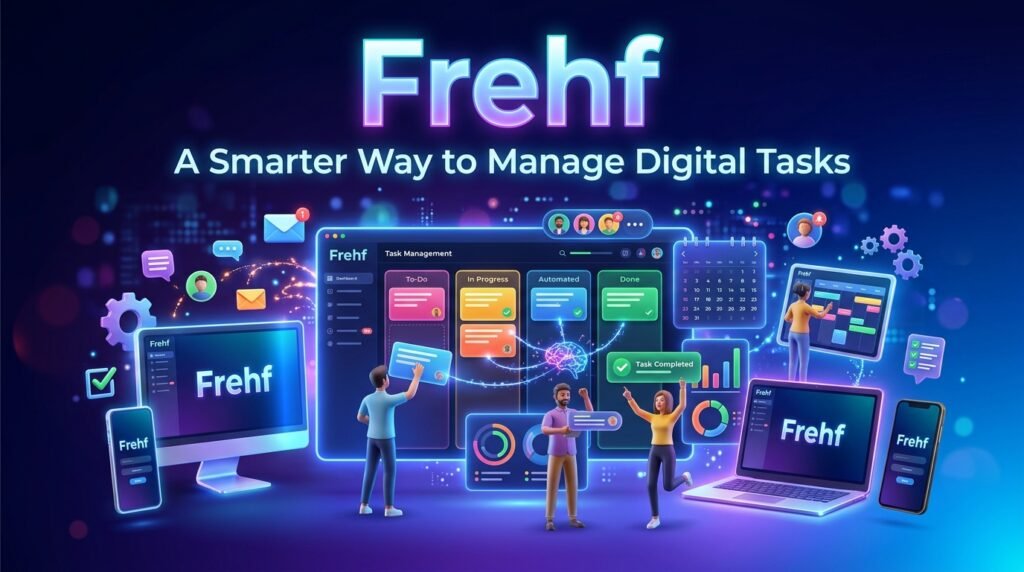
Frehf: A Smarter Way to Manage Digital Tasks
Introduction
Frehf represents an interesting concept in the evolving world of digital productivity, where people increasingly depend on online systems to organize their daily activities. From managing professional responsibilities to completing simple online tasks, digital tools have become an essential part of modern life. As individuals and businesses search for faster and more convenient ways to handle their workloads, solutions focused on simplicity, organization, and efficiency are gaining attention.
Managing digital responsibilities can sometimes become overwhelming. People regularly switch between applications, websites, communication platforms, and productivity tools. Without a clear system, important activities can be forgotten, deadlines can be missed, and valuable time can be wasted.
This is where the idea of a smarter digital task management approach becomes relevant. By bringing everyday activities into a more organized workflow, users can improve their productivity and maintain better control over their responsibilities.
In this guide, we explore the concept, potential benefits, practical applications, and important considerations surrounding this emerging digital productivity term.
What Is Frehf and Why Is It Relevant?
Frehf can be explored as a digital productivity concept associated with simplifying online activities and making everyday tasks easier to manage. Its relevance comes from the growing demand for accessible digital solutions that reduce unnecessary effort and help users stay organized.
Modern users often have several responsibilities competing for their attention. A business owner might need to respond to emails, manage customer inquiries, update website content, and monitor online orders. Similarly, students may need to organize assignments, research information, attend online classes, and prepare projects.
Handling these activities without an effective system can create confusion.
A structured digital workflow helps users understand what needs to be completed, which activities deserve priority, and how much time should be allocated to each responsibility.
Rather than depending entirely on memory or scattered notes, people can adopt a more consistent approach to managing their online work.
It is important to note that Frehf should not automatically be treated as a verified software platform or established application without an official product website or reliable documentation. Its specific features and availability should be confirmed before making claims about a particular service.
How Frehf Fits Into Modern Digital Task Management
Digital task management has changed significantly over the past decade. Previously, people relied heavily on handwritten schedules, spreadsheets, and basic reminder applications. Today, cloud-based platforms and automated systems make it possible to coordinate activities across multiple devices.
The modern approach focuses on creating organized workflows that reduce repetitive work.
For example, a freelancer managing several clients might divide responsibilities into categories such as research, communication, content creation, editing, and delivery. Each category can have its own deadlines and progress indicators.
This structure makes complicated workloads easier to understand.
A well-organized digital system generally includes the following elements:
-
Task organization and categorization.
-
Deadline tracking and reminders.
-
Progress monitoring.
-
File and information management.
-
Collaboration and communication.
-
Workflow automation.
Together, these functions can help individuals maintain better control over their daily activities.
Key Features of a Smarter Digital Productivity System
An effective productivity solution should make everyday work easier rather than introduce unnecessary complexity. Several features are particularly valuable when organizing digital responsibilities.
Task Organization and Prioritization
Task organization is one of the most important elements of productivity management.
Users should be able to separate urgent activities from less important responsibilities. For instance, completing a client project before its deadline may require greater attention than organizing old documents.
A priority-based approach helps people focus on meaningful work instead of constantly switching between unrelated activities.
Simple and Accessible Interface
A complicated interface can discourage users from maintaining an organized workflow.
A practical digital solution should offer clear navigation, understandable controls, and straightforward task management options. Users should be able to find important information without spending unnecessary time exploring menus.
Accessibility across desktop computers, tablets, and smartphones can also improve convenience.
Automation and Repetitive Tasks
Automation helps reduce the time spent on activities that follow predictable patterns.
Examples include sending scheduled reminders, organizing incoming information, creating recurring tasks, and updating workflow statuses.
For small businesses, automation can reduce administrative workloads and allow employees to concentrate on more valuable responsibilities.
Progress Tracking
Progress tracking provides a clear understanding of completed and pending activities.
A visual dashboard, checklist, or progress report can help users identify delays and adjust their schedules when necessary.
These features are especially useful for freelancers, project managers, and teams handling multiple assignments.
Benefits of Using Frehf for Everyday Online Activities
The growing interest in digital productivity reflects a simple reality: people want to accomplish more without making their working routines unnecessarily complicated.
A structured approach to managing online tasks can provide several advantages.
| Productivity Benefit | How It Helps Users |
|---|---|
| Better organization | Keeps responsibilities structured |
| Time management | Reduces unnecessary delays |
| Task prioritization | Highlights important activities |
| Improved focus | Minimizes distractions |
| Workflow efficiency | Reduces repetitive work |
| Progress monitoring | Makes performance easier to evaluate |
| Collaboration | Helps teams coordinate responsibilities |
These benefits are relevant to different types of users.
Students can organize their academic responsibilities, professionals can manage workplace assignments, and entrepreneurs can coordinate business activities more effectively.
The biggest advantage is having a clearer understanding of what needs attention throughout the day.
How Frehf Can Help Freelancers and Remote Workers
Freelancers and remote professionals often manage several projects simultaneously. Unlike traditional office employees, they may work with different clients, follow separate deadlines, and communicate through multiple online channels.
Without an organized system, managing these responsibilities can become difficult.
A structured productivity workflow can help freelancers divide projects into smaller activities. For example, a content writer may organize a client assignment into keyword research, outline preparation, drafting, proofreading, optimization, and final submission.
Each activity can be assigned a deadline and tracked independently.
Remote workers can also benefit from maintaining a consistent daily schedule. By identifying important activities before starting work, they can avoid spending too much time deciding what to do next.
For independent professionals, better organization can improve client communication and make project delivery more predictable.
The Role of Frehf in Business Productivity
Businesses depend on effective coordination between employees, departments, customers, and suppliers. When responsibilities are unclear, even relatively simple processes can become inefficient.
Digital task management can help companies create consistent working procedures.
For example, an online business might use a structured workflow for processing customer orders. The process could include receiving an order, confirming payment, preparing the product, arranging delivery, and updating the customer.
Assigning responsibilities to specific employees makes the process easier to monitor.
Small businesses can also benefit from organizing marketing campaigns, maintaining customer records, tracking website updates, and scheduling social media content.
The objective is not to automate every activity. Instead, businesses should identify repetitive processes where digital organization can save time and reduce avoidable mistakes.
Frehf Compared With Traditional Task Management
Traditional task management methods are still useful, particularly for simple personal responsibilities. However, digital systems offer additional flexibility when people need to coordinate several activities.
The following comparison highlights some important differences.
| Comparison Factor | Traditional Methods | Digital Task Management |
|---|---|---|
| Task recording | Paper or notebooks | Digital dashboards |
| Reminders | Manual reminders | Automated notifications |
| Accessibility | Physical availability | Multiple connected devices |
| Collaboration | Face-to-face communication | Online collaboration |
| Progress tracking | Manual updates | Digital status tracking |
| Information sharing | Physical documents | Online file sharing |
Traditional methods can be effective for people who prefer simple routines. Digital solutions become more useful when activities involve multiple deadlines, teams, or information sources.
Choosing the right approach depends on individual requirements rather than simply following the latest technology trends.
Practical Ways to Improve Your Digital Workflow
Building a productive routine does not require expensive software or complicated technical knowledge. A few practical habits can make a meaningful difference.
Start by identifying the activities you regularly perform. Divide them into categories such as personal responsibilities, professional assignments, communication, and administrative work.
Next, establish realistic priorities. Not every task deserves the same level of attention. Focus on activities that have important deadlines or contribute directly to your goals.
Avoid creating unnecessarily long task lists. Breaking larger responsibilities into smaller steps makes them easier to complete and monitor.
You should also review your progress regularly. At the end of each working day, identify completed activities and prepare priorities for the following morning.
Finally, reduce unnecessary notifications. Constant interruptions can make concentration difficult, even when your task management system is well organized.
Challenges and Limitations of Digital Task Management
Although digital productivity solutions offer several advantages, they are not without limitations.
One common problem is overcomplication. Some users spend more time organizing tasks than actually completing them. Excessive categories, notifications, and tracking requirements can create additional pressure.
Another concern is digital distraction. Working across multiple applications can encourage unnecessary browsing and frequent interruptions.
Privacy and data security also deserve attention. Users should understand how their information is stored, who can access it, and whether the selected service provides appropriate security protections.
There is also the possibility of technical interruptions. Internet connectivity problems, software errors, and device failures can affect access to important information.
The best solution is to maintain a balanced approach. Use digital tools where they genuinely improve efficiency, but avoid adding technology to processes that are already working effectively.
What Is the Future of Digital Task Management?
The future of digital productivity will likely involve greater integration of artificial intelligence, automation, and cloud-based collaboration.
AI-powered assistants are already changing how people approach everyday responsibilities. They can help summarize information, organize research, generate content outlines, and support repetitive administrative activities.
Automation is also becoming more accessible to small businesses and independent professionals.
For example, a business owner may connect customer inquiry forms with a project management application. When someone submits a request, the system can automatically create a task for the relevant employee.
These developments could make digital workflows more efficient and accessible.
However, human judgment will remain important. Technology can organize information and automate predictable processes, but users must still make decisions, evaluate results, and maintain responsibility for their work.
The most successful productivity systems will be those that combine useful technology with practical working habits.
Conclusion
Frehf provides an interesting starting point for exploring the growing importance of digital productivity and organized online workflows. As personal and professional responsibilities become increasingly connected to technology, people need practical ways to manage information, deadlines, and everyday activities.
A smarter approach involves combining task organization, prioritization, automation, and progress monitoring without making the working process unnecessarily complicated.
Whether someone is a student, freelancer, remote employee, or business owner, developing consistent digital habits can improve efficiency and reduce daily confusion.